
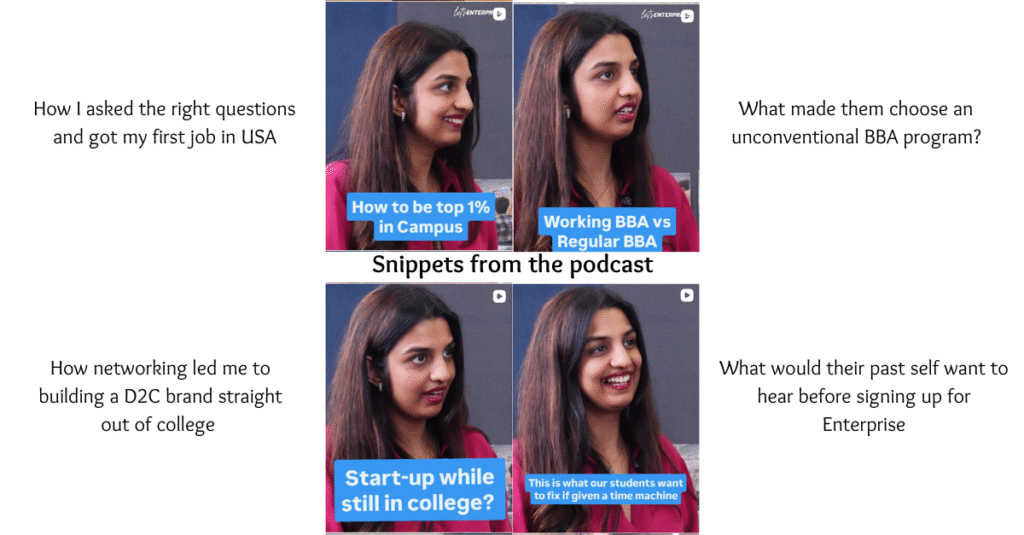
In April 2020, I joined the Let’s Enterprise as a wide-eyed engineering student who didn’t know what a customer journey map was. For one year, I worked on live projects with real clients, co-created community events, wrote reflective blogs through a process called Conflexions, and slowly figured out that my brain worked best at the intersection of systems, people, and stories.
Enterprise didn’t teach me business in a classroom. It threw me into the deep end and said, figure it out. And I did. Messily, imperfectly, but I did.
Fast forward to 2025. A former colleague, Dr Dr. Trupti Shirole, reached out. Enterprise had evolved : from a fellowship that ran alongside your college degree to a full three-year BBA program. Students now spend their entire undergrad doing hands-on learning with live projects, and take their University exams. The model had scaled, and they needed content that could capture what this experience actually feels like from the inside.
So I went back. Not as a student partner this time, but as someone building a content project from scratch.
Here’s the thing nobody tells you about going back to a place that shaped you: it’s disorienting. The energy is familiar but the context is completely new. The students I was working with hadn’t even started their program yet. They were fresh, untrained, unsure. Basically me, five years ago. And I was supposed to create something with them, not for them.
There was no brief. No roadmap. No content calendar handed to me. The project was mine to define, scope, and execute.
So I did what Enterprise taught me to do: I started building systems.
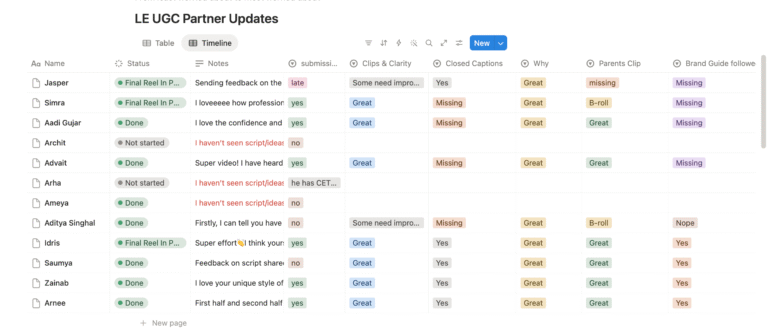
I created a tracking system to keep stakeholders updated. I set up workflows to coordinate with student partners who were still learning how to show up to meetings on time. I pre-decided all whatsapp & email communication and references. I mapped out the content into a series of day-in-the-life vlogs and reels featuring the students, followed by a podcast where two groups of two students talked about what made them choose this unconventional path over a traditional college.
The podcast was the heart of it. I wanted to bring back the spirit of Conflexions : a reflective process from my fellowship days introduced by Akash Bhalerao, where you sit with your experiences and turn them into something honest. Except this time, the format was different. Instead of written blogs, it was a conversation and for some of the students, a reel. And instead of reflecting on my own journey, I was holding space for someone else’s.
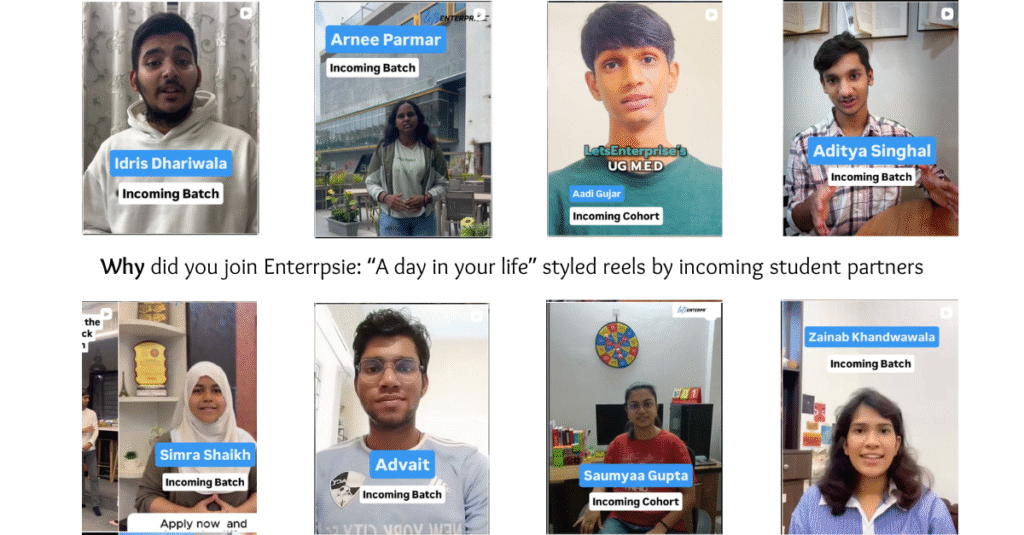
The reels came first. I created a day-in-the-life template and shared it with the students. The idea was simple: document your WHY. Why did you choose this path instead of a traditional college? Most of the students ran with it and made something real. The content was designed to reach students who were already considering Enterprise but needed that final push : hearing it from someone their own age, in their own words, on their own phone screen.
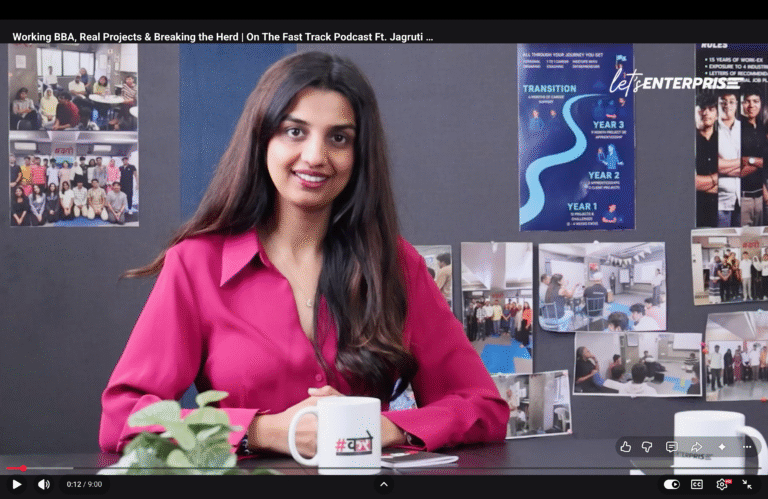
The podcast was the deeper layer. If the reels were for students who were almost convinced, the podcast was for the ones sitting on the fence, the “not sure” segment. Two groups of two students, each having an honest conversation about choosing an unconventional education path. And because I’d already gone through the Conflexion process with them : the reflective writing and digging into their own stories. I knew what questions to ask and how to get to the real answer, not the rehearsed one. I also wove in stories from my own time at Enterprise, and stories of my fellow partners from back then, depending on where the conversation naturally went.
But honestly? Preparing for the podcast was my favourite part. It had been on my 2025 bucket list and I wasn’t going to wing it.
I designed warm-up questions to get the students comfortable before we hit record. The kind of questions that make you laugh or think, not freeze. We practised voice modulation together. I walked them through the basics: don’t interrupt when someone is speaking, avoid filler words, let a pause breathe instead of filling it with “umm.” We sorted out lighting, the setup, the energy in the room. By the time we actually recorded, the students weren’t performing, they were just talking. And that’s when the good stuff comes out.
The podcast On the Fast Track is now up on the Let’s Enterprise YouTube channel. And watching it feels surreal, not because the production is flashy (it’s not meant to be), but because these students are sitting in the same chairs I once sat in, asking the same questions I once asked, and choosing the same uncomfortable, beautiful path of learning by doing.
If I had to distill this whole experience into a few things I’d want to remember:
- Building without a playbook is a skill. There was no brief here. I defined the scope, created the tracking systems, coordinated the students, and figured out what “done” looked like, all on my own. That muscle doesn’t build in classrooms.
- Working with beginners teaches you more than working with experts. When someone doesn’t know the “right” way, they force you to explain your own thinking clearly. Half the time, you realise your assumption was shaky anyway.
- Going back to where you started shows you how far you’ve come. The girl who fumbled through her first sales call at Enterprise is the same girl who just produced a content series end-to-end for them. Same place, different version of me.
If you’re someone from Enterprise reading this, a current student, alumni, or just curious — go watch the podcast. These students chose a path most people don’t understand yet, and they talk about it with a honesty that I wish I had at their age.
And if you’ve ever had the chance to go back to a place that shaped you, not as a visitor, but as a contributor, take it. There’s something about closing that loop that no new opportunity can replicate.
On the Fast Track is live on the Let’s Enterprise YouTube channel.